The 90s Were Genuinely Terrible and We Cannot Stop Paying to Pretend Otherwise
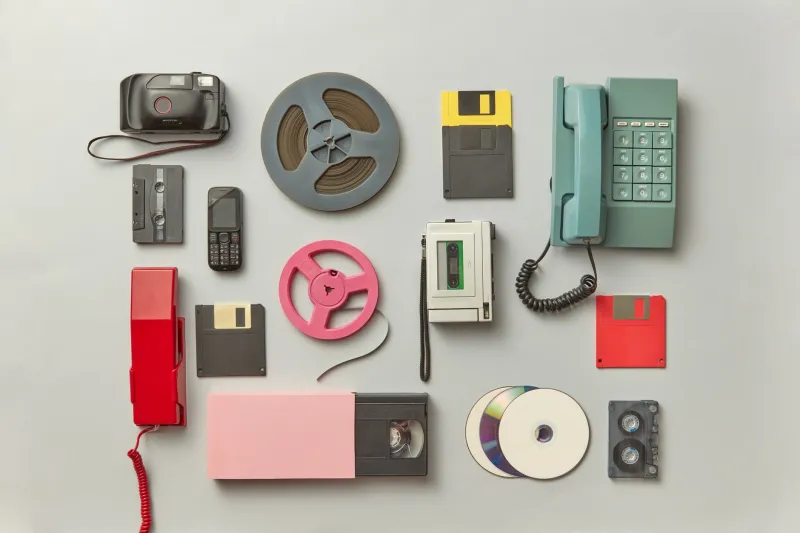
I want to start with a fact that I think we have collectively agreed not to think about too hard: dial-up internet made a sound. A specific, extended, deeply unpleasant sound, like a fax machine having a spiritual crisis, that you had to listen to every single time you wanted to access the early internet, which was itself mostly just text and occasionally a jpeg that took four minutes to load from top to bottom like a very slow curtain being raised on nothing interesting.
This was the experience. This was the whole thing. And right now, somewhere in Brooklyn, a twenty-eight-year-old is paying a premium for a retro-styled modem lamp that recreates the aesthetic of that era, and calling it "cozy."
We have entered the nostalgia laundering era, and I, a person who lived through the original inconveniences, have some thoughts.
What We're Actually Remembering
Here is the psychological sleight of hand at the center of all 90s nostalgia: we are not remembering the friction. We are remembering how we felt during the friction, which was young, and uncomplicated, and not yet aware of how many things were going to be our problem later.
The dial-up internet was not charming. The dial-up internet was a genuine obstacle to doing basic things. But we were also fourteen, and the bar for entertainment was low, and the concept of "always-on connectivity" had not yet colonized our brains, so we sat in front of the computer and waited and it was fine. The warmth we feel when we think about it now is not warmth about the technology. It is warmth about being fourteen and not having a mortgage.
We have laundered the inconvenience clean and kept only the feeling, which is a neat trick but also the basis for a significant consumer market.
The Disposable Camera Industrial Complex
Nothing illustrates this better than the disposable camera comeback. These things — single-use plastic cameras that produced twenty-seven slightly blurry photographs that you could not see until you drove to a drugstore and waited three to five business days — are now a staple at weddings, birthday parties, and apparently any gathering where the goal is to create the aesthetic of not knowing what you're doing.
A disposable camera at a 2024 wedding costs somewhere between twelve and eighteen dollars. The photographs will be grainy. Several will be accidental close-ups of someone's elbow. One will be completely black. Everyone will love them.
I understand this, actually. The imperfection is the point. In a world where your phone can produce a technically flawless photograph in any lighting condition, the imperfect image signals something — spontaneity, authenticity, a kind of deliberate unpreciousness about the moment. The blurry photo says "we were just living" in a way that the perfectly exposed, algorithmically optimized phone photo cannot.
But here is the thing: we were not just living in the 90s. We were annoyed. We were annoyed that the photos were blurry and we couldn't see them for five days and half of them were wasted on nothing. We complained about this. I remember complaining about this.
Getting Lost as a Lifestyle
The GPS conversation is the one that really gets me. There is now a genuine movement of people who occasionally turn off their navigation apps to experience the "authentic" feeling of not knowing where they are. Travel writers celebrate this. Lifestyle brands sell journals specifically designed for documenting the experience of wandering without direction. Getting lost, which was once a minor stressor that could make you late to things, has been repackaged as a form of mindfulness.
I grew up in the era before GPS, which means I grew up in the era of asking strangers for directions, receiving instructions that included phrases like "turn left at the old Kmart" (the Kmart was no longer there), and arriving places anywhere between fifteen minutes early and forty-five minutes late with no reliable method of communicating which outcome it would be. This was not a spiritual experience. This was just driving.
Now you can buy "analog navigation kits" — which are paper maps, presented as a wellness product — for thirty-five dollars on Etsy. The map does not know about traffic. This is the selling point.
What Progress Actually Costs Us
Okay, here is where I want to be slightly fair to the nostalgia industrial complex, because I think there is something real underneath the absurdity. The friction of the pre-internet era was genuinely, accidentally good for some things. Boredom was unavoidable and boredom is, it turns out, where a lot of creativity lives. Waiting — for a webpage, for a photo, for a returned phone call — built a tolerance for delayed gratification that the current environment does not naturally produce. Not being reachable at all times was a feature that we only recognize as such now that it is gone.
So when people buy vinyl records or write letters by hand or take film photography classes, they are not entirely wrong about what they're chasing. They are trying to reintroduce friction into a frictionless life, because something about the friction made the experience feel more real, more earned, more theirs.
They are just paying forty dollars for a record that sounds slightly worse than the streaming version to do it, which is a very 2024 solution to a very 2024 problem.
The Blockbuster Thing
I promised I would address the Blockbuster thing. The last remaining Blockbuster Video is in Bend, Oregon, and it is a tourist destination. People drive to it. People take photographs in front of it. There is merchandise. The nostalgic affection for Blockbuster — a company that charged you late fees, frequently did not have the movie you wanted, and went bankrupt because it refused to adapt — has become so powerful that it functions as a cultural monument.
Blockbuster was fine. It was a video rental store. It was not a golden era. And yet.
I think what we are mourning, when we photograph ourselves in front of the Bend Blockbuster, is not the store. It is the version of Friday night that the store represents — the one where the plan was simple and the stakes were low and the worst thing that could happen was that someone had already rented the movie you wanted. That Friday night is gone, replaced by a Friday night with infinite options and the persistent low-grade anxiety of choosing between them.
The 90s were genuinely, objectively inconvenient. The internet was slow, the choices were limited, and the navigation was a mess. But inconvenience, it turns out, is sometimes the price of a certain kind of peace.
We traded it for everything we have now, which is a lot, and also occasionally too much.
The modem lamp, though. I'm not saying I want one. I'm just saying I looked at it for a while.