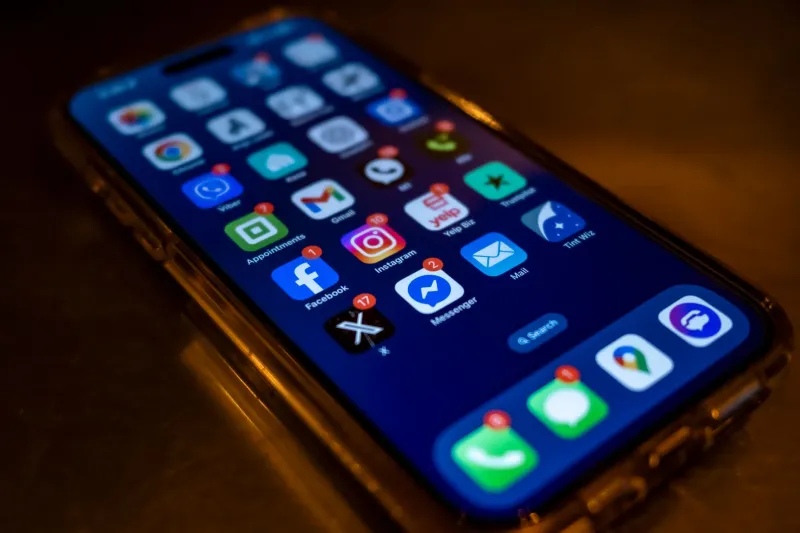
Hang Up on the Future: The Surprisingly Real Movement of People Ditching Their Smartphones for Rotary Dials and Busy Signals
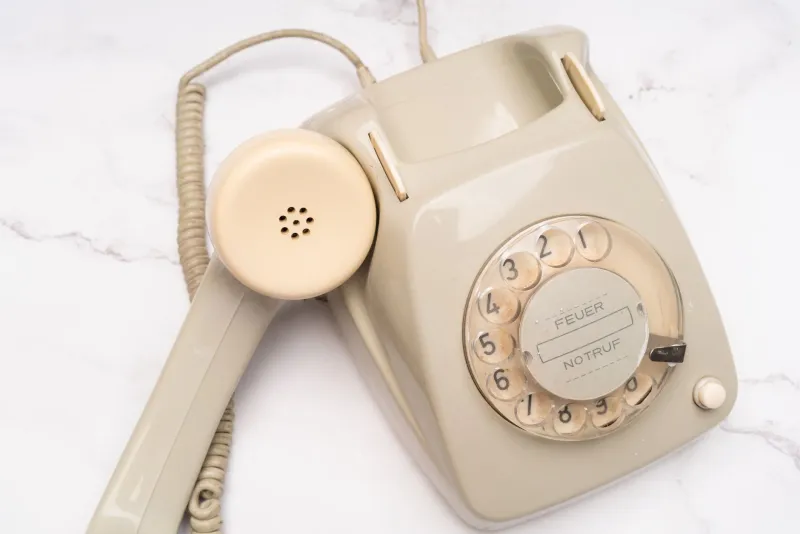
Somewhere in Portland, Oregon — and yes, of course it's Portland — a 34-year-old graphic designer named Marcus has a landline phone sitting on his kitchen counter. It's cream-colored, corded, and looks like it escaped from a 1987 dentist's waiting room. He is extremely proud of it. He will tell you about it unprompted.
"People think I'm joking at first," Marcus told me, which tracked, because I also thought he was joking. "Then they realize I'm serious, and they get this look on their face — like I just told them I've started churning my own butter."
He has not started churning his own butter. Yet.
Marcus is part of a quietly growing movement of Americans who are voluntarily stepping away from smartphones — not out of financial necessity, not because they lost their phone in a toilet (though, relatably, we've all been there), but as a deliberate, considered, occasionally insufferable lifestyle choice. They are paying real money to go backward. And the rest of us are left trying to figure out if this is genius, madness, or just a very elaborate bit.
The Numbers Are Weirder Than You'd Think
Let's establish that this is not purely anecdotal. Landline subscriptions in the U.S. have been declining for years — that part you knew. But here's the twist: specialty retailers selling vintage and refurbished corded phones have reported upticks in sales among buyers under 40. Companies selling so-called "dumb phones" — devices that make calls and send texts and absolutely nothing else — have seen demand spike. The Light Phone, a minimalist device that fits in your palm and refuses to install Instagram on principle, has cultivated a cult following that would make Apple nervous if Apple weren't so busy making your next iPhone slightly thinner.
This isn't a mass exodus. It's more like a slow trickle of people quietly slipping out the back door of the attention economy while everyone else is still arguing in the comments section.
So Who Are These People, Exactly?
Spend enough time reporting on this trend and a few archetypes emerge.
There's the Burned-Out Professional — typically someone in their late 20s or 30s who spent the pandemic glued to a screen, emerged blinking into 2022, and decided that the phone had to go. "I realized I was checking my email at 11 p.m. on a Saturday," said Diane, a marketing consultant from Austin. "Not because anyone needed me. Just because the phone was there. The landline can't come to bed with me. That's the whole point."
Then there's the Aesthetic Purist, which is a polite way of saying someone who found a vintage Trimline phone at an estate sale and built an entire personality around it. These are the folks whose apartments look like a Wes Anderson set and who use the word "intentional" more than a life coach at a wellness retreat.
And finally — and this is where it gets genuinely interesting — there's the Tech Worker. Silicon Valley insiders who helped build the very apps now colonizing everyone's brains are, with increasing frequency, opting out of their own product. There's something almost poetic about the person who designed the infinite scroll sitting in their Marin County home with a landline, staring at the wall, and feeling, finally, at peace.
Is This Freedom or Just Expensive Cosplay?
Here's the uncomfortable question that nobody in this movement really wants to answer: Is ditching your smartphone a genuine act of rebellion, or is it the ultimate status symbol?
Because let's be honest. You know who can afford to not have a smartphone? People who have other people to handle the things a smartphone handles. You need a smartphone to navigate an unfamiliar city, to apply for jobs, to access healthcare portals, to do your banking, to get your kids from school when your car breaks down. The landline renaissance, at its core, is a luxury available primarily to people whose lives are already stable enough that they can afford to introduce inconvenience as a design feature.
"It's the new vacation home," said Dr. Priya Nair, a consumer psychologist based in Chicago. "The message isn't 'I can't afford a smartphone.' The message is 'I'm so successful and so sorted that I don't need one.' It's conspicuous rejection."
Ouch. But also: fair.
Marcus, to his credit, doesn't entirely disagree. "Yeah, I still have a smartphone," he admitted after a beat. "I just... try not to use it as much. The landline is more like a symbol of intent."
A symbol of intent. For $180 plus installation.
The Part That Actually Makes Sense
Here's the thing, though — and GoTillman is nothing if not willing to find the kernel of sanity inside the most ridiculous trend: the underlying impulse is not crazy.
Smartphones are, by design, engineered to be impossible to put down. Every notification, every red badge, every algorithmically timed piece of content is the result of billions of dollars and thousands of engineers working to keep your eyeballs locked in. Wanting to resist that isn't irrational. It's almost the only rational response.
The landline — or the dumb phone, or the deliberate practice of leaving your iPhone in a drawer — is a blunt instrument aimed at a very real problem. Is it a perfect solution? No. Is it sometimes a little precious and self-congratulatory? Absolutely. But is the problem it's responding to genuine? Without question.
Diane in Austin put it simply: "I sleep better. I'm more present when I'm with people. I finish books now. Is that worth being slightly harder to reach? For me, yes."
Hard to argue with sleeping better and finishing books.
What Tillman Thinks
Look, nobody here at GoTillman is going to tell you to go rip your phone out of the wall and replace it with a rotary dial. But the next time your phone buzzes at midnight with a push notification from an app you downloaded once in 2019 and forgot about, maybe — just maybe — you'll understand why someone, somewhere in Portland, is sitting next to a cream-colored corded phone, not checking anything, and feeling weirdly okay about it.
Whether that's wisdom or a $180 aesthetic choice is, honestly, up to you.